Trauma Aid International Second Annual Virtual Conference
Capacity Building in EMDR
Our Mission
Trauma-focused care should not be a privilege of geography.
Trauma Aid International (TAI) is an EMDR international NGO closing the gap between trauma and trauma care — wherever that gap exists. It is a gap of scale: the prevalence of psychological trauma, globally, far outstrips the availability of clinicians trained to treat it.
It is a gap of geography: specialist, evidence-based care concentrates where resources already are, and thins to nothing where need is often greatest — in post-conflict and humanitarian settings, under-resourced health systems, and communities carrying the weight of collective and intergenerational adversity.
And it is a gap of trust: care extended into new settings and new workforces is only as credible as the standards that stand behind it.
TAI closes each of these in turn, built on a simple premise: that trauma-focused care should not be a privilege of geography, and that task-sharing, done rigorously and ethically, can extend the reach of evidence-based treatment without diluting its integrity. We train clinicians, allied health workers, and peer supporters to deliver culturally adapted EMDR therapy and EMDR/AIP-informed interventions. We develop EMDR Low Intensity Programmes (ELIP) purpose-built for settings where demand will always outstrip specialist supply. We certify and accredit that training, so "trained" and "certified" mean something consistent wherever they're used. And we conduct and exchange the research that keeps all of it honest — because closing the gap quickly is only worth doing if it's closed well.
What We Do
Four Interconnected Pillars
Trauma Aid International's work rests on four interconnected pillars — training, innovation in service delivery, quality assurance, and research — each reinforcing the others to build trauma care capacity that is both scalable and safe.
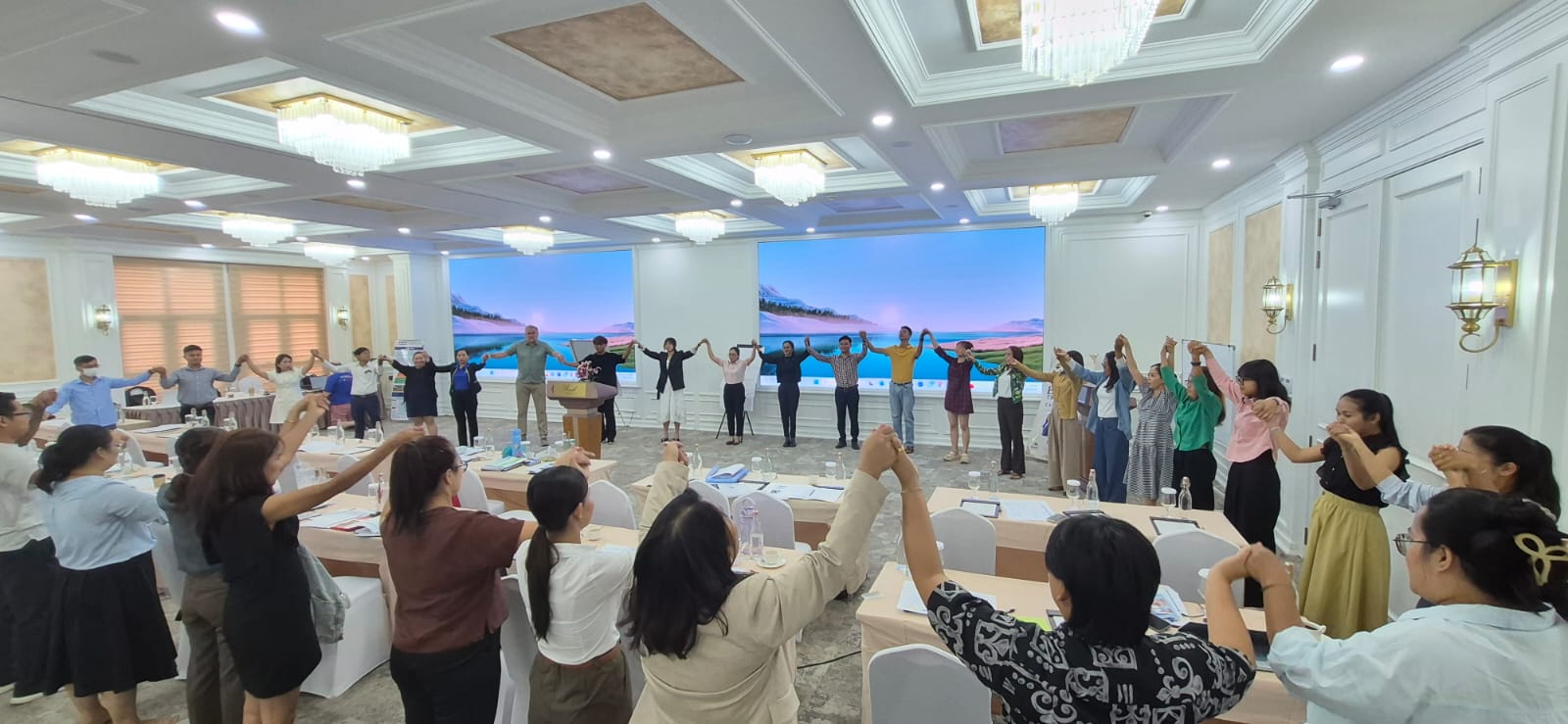
Training
Bespoke, Culturally Adapted EMDR Training
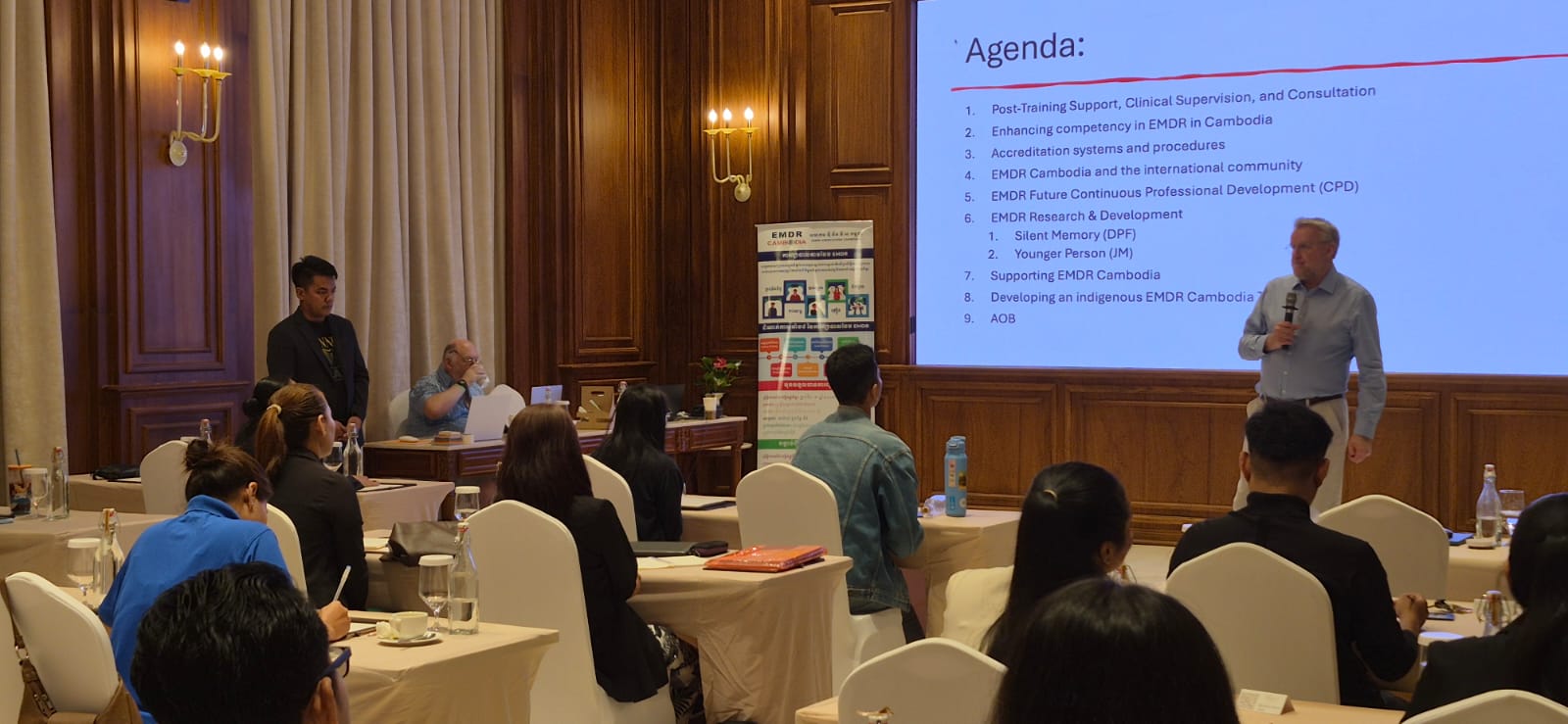
We design and deliver EMDR therapy training programmes adapted to the cultural, linguistic, and clinical realities of the communities we work in. Rather than exporting a fixed curriculum, our training is built in partnership with local clinicians and institutions, ensuring that what we teach is clinically rigorous and contextually meaningful — from how trauma is understood and disclosed, to the realities of the health systems trainees return to.
ELIP
EMDR Low Intensity Programmes
In many settings where trauma need is greatest, the number of specialist EMDR clinicians will never match the scale of demand. TAI's ELIP work responds directly: developing structured, low-intensity EMDR/AIP-informed interventions that can be delivered by trained allied health workers and peer supporters, under appropriate supervision and guidance. This is task-sharing in the proper sense — not a diluted substitute for specialist care, but a deliberately designed tier of intervention, grounded in AIP theory and built for the realities of low-resource settings.
Certification & Accreditation
Quality Assurance for Low-Intensity Practice
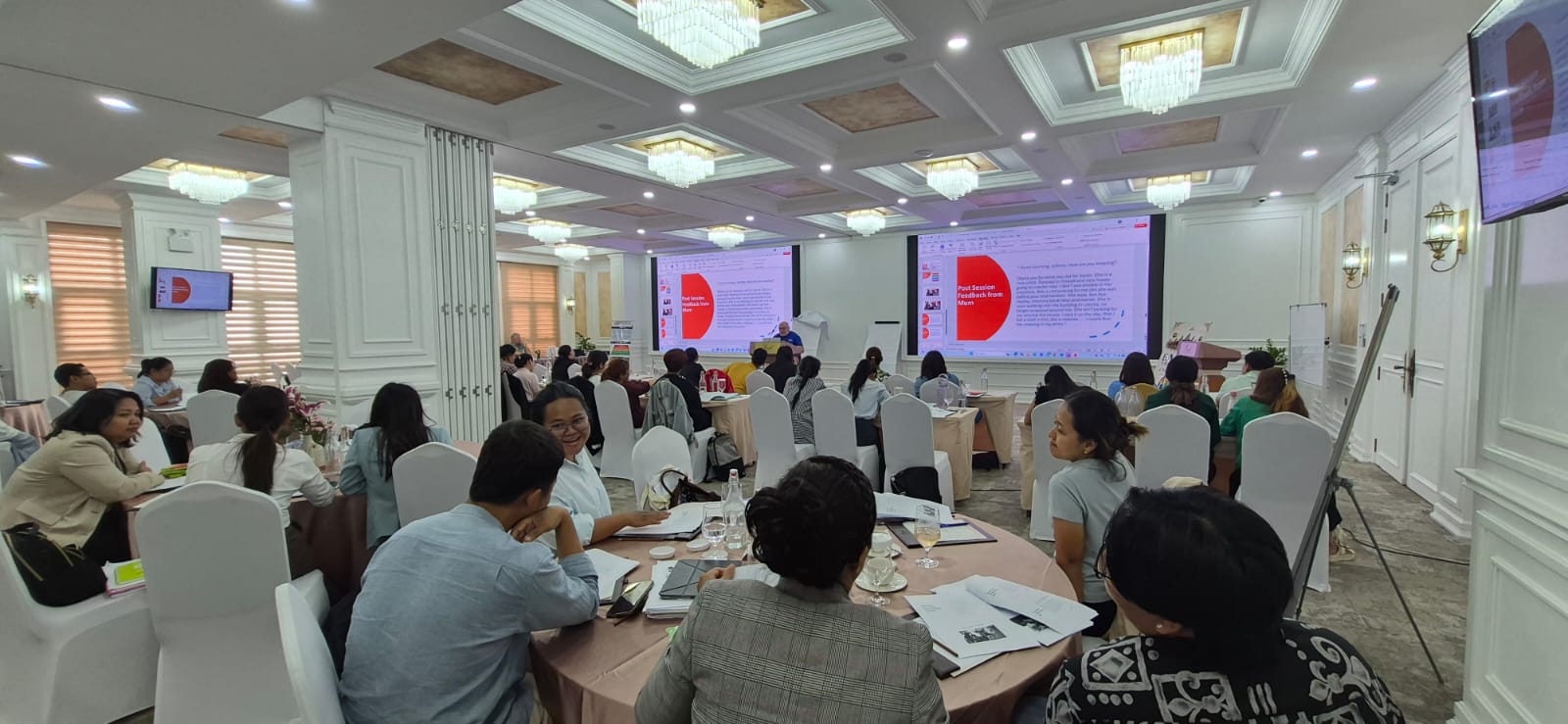
Scaling access to care only works if quality is maintained. TAI certifies ELIP training programmes, trainers, and participants against defined competency standards, so that partner organisations, funders, and — most importantly — the people receiving care can trust what "trained" and "certified" mean in this context. This safeguard ensures task-sharing is responsible and accountable.
Research & Knowledge Exchange
Keeping the Evidence Honest
None of the above is credible without research behind it. TAI supports and conducts research into EMDR/AIP-informed trauma capacity building — from feasibility and effectiveness studies to psychometric and implementation science — and works to ensure findings flow back into training, ELIP design, and certification standards. Knowledge exchange runs in both directions: from the field into the evidence base, and from the evidence base back into practice.
Our Board
Governed by an international community of clinical, research, and organisational leaders
Trauma Aid International is governed by an international board bringing together clinical, research, and organisational leadership from across the EMDR community.
President
Prof Derek Farrell MBE
Vice President
Lorraine Knibbs
Secretary
Penny Papanikolopoulos
Treasurer
Johnny Moran
Chair, Conference Organisation Committee
Marlene Kenney
Annual Virtual Conference
Chair, Accreditation/Certification Committee
Paul Miller & Derek Indoe
Chair, Research/Knowledge Exchange Committee
—
Chair, Humanitarian Award
Tessa Prattos
Chair of Governance
Lorraine Knibbs
Chair, TAI Website Committee
—
Stay Connected